Friday, October 07, 2005

Beijing Babylon


Mihaa! (Greetings, viewers, but not in Mongolian.)

I've been struggling with this piece for sometime now, and have eventually had to release it into the wild without having given it a full physical. Even so, despite wrestling with the subject matter, I have not been either shooting arrows at it or horse racing it, for this is not a Mongolian issue. This piece concerns China. China, on the other hand, is probably deeply unconcerned by this piece. Quid no quo. Grab your wontons and green tea and settle in.

China is, as we know, intrinsically vast. Any discussions of China presupposes this massive girth- geographic, demographic, economic, cultural, historical, take your pick; it's a behemoth. There's no such thing as a little China.

Playing the numbers with China is a mug's game, because the figures involved are akin to those used to calculate distances in space, but it may be instructive to mention a few here. 1.3 billion people (that's 20 percent of everybody), spread over 9.6 million square kilometres. Shared borders with 14 other countries. A total of 1.8 million kilometres of roads, with five million private cars purchased a year. Annual growth rates in double figures, despite unemployment rates of 20 percent. The second largest economy in the world, ranked 85th on the Human Development Index. Three hundred million people without adequate sanitation. Whatever point it is one is trying to prove, the numbers for China will make the point for you dramatically.

But what, then, is the point? How to encapsulate all that bigness into one easily digestible intellectual biscuit? Bearing in mind the fallacy of the visitor in any circumstance is to try to extrapolate a grand theory based on a set of thin conclusions, conclusions which are in turn a result of a narrow set of experiences comprised of a fistful of rapid observations. So we're still no closer.

This extemporizing is problematic when considering Lichtenstein or Tonga, but applying this approach to China is unwise indeed. The plurality of the Chinese whole defies comfy theorizing- any operant assumptions are easily contradicted just around the next corner. Much of what one hears or assumes about China is wrong, or at best readily deniable. This isn't particularly unique- the same applies to much of what is written and said about America. Nonetheless, that doesn't stop anyone from coming up with pat assumptions and one sentence summaries.

All of which is to say, much of what follows is wrong.

Through the centuries, China has kept going, come what may. At massive cost and with sometimes retrograde motion, but it is as it has been for thousands of years: immensely powerful. China in this regard contravenes the standard narrative applied to dominion- implicitly, the notion of empire presupposes decline and fall. Rome, the Mongols, The Ottomans, the British, the Soviets-their empires have come and gone, while geopolitically speaking, the Chinese are still in the hunt, and could still ascend further. This is perhaps due to the fact that China's mass is contiguous, and consequently easier to control than a far flung series of satelites might be. This is painting in broad strokes to be sure, but the fact is that the future of a strong China is still playing out, and does not represent a closed historical chapter in the same way that say, the British Empire does. China has declined and fallen flat any number of times- a fair few times in the 20th Century alone- but with every seeming collapse China reinvents itself and carries on, apparently gaining momentum as it does so. Formidable ironies pile up quickly, as yesterday's anathema is today's ordre du jour, but perhaps it is this mutability which keeps China's sails so full of wind.

The result of this ideological pig pile is juxtaposition of everything one might care to ascribe to the concept of China, writ on a massive scale.

As one approaches the sleepy little hamlet of Beijing (pop.15 million), capital of the communist People's Republic of China, it is the forces of capitalism that first emerge from the gloom. Clusters of skyscrapers stand on either side of the road, each crowned with a single giant corporate logo- Nokia, Microsoft,Luftansa- concrete and steel fingers stretched out for coin. The buildings themselves are functional blocks with occasional accents or color, but for the most part simply appear to be unadorned money making factories. This is repeated throughout the city, as one realizes that China is El Dorado- the biggest market and the cheapest labour going.

If you're in the business of making a buck, you simply cannot afford to ignore China and risk losing out. Incredibly posh shops and corporate frontage are purchased at lavish expense to peddle Louis Vuitton and Audemars Piguet at prices that no one can afford, ignoring the inconvenient fact that knockoffs are available just across town for rock bottom prices. A Rolls Royce dealership sits between Burberry and Prada on Beijing's main drag, Chang'an Avenue, fifteen minutes walk from Mao's Mausoleum. The most powerful communist state on the planet is one of the most nakedly venal places on earth. China is for sale, and everything's negotiable.

Insatiable moneymaking has driven property prices sky high, with old buildings being destroyed in order for something more profitable to be constructed. There's a clock on all this: the Olympics in 2008, for which Beijing must be shiny to the point of blinding. China World Trade Centre is looking to throw up a 80 story wonder, in addition to its two existing 40 story towers. Dozens of cranes work single construction sites, round the clock, seven days a week. We walked along streets on which huge billboards in red and white advertised thrilling new residential opportunities coming soon suitable for executives and foreigners. In the breaks between the billboards, bulldozed shanties lay in piles, with folk squatting in locations destined for higher things. Sanlitun Bar Street, a bohemian strip of pavement bars and nightclubs is scheduled for complete razing, renovation and restoration as a high end entertainment mall by 2007. The western side of the street already is rubbled, with one establishment which has somehow held out left adrift in a unlit field of broken stones, with a sign announcing "We Still Here." How long that will hold true is anyone's guess. Probably not much longer, for the future is coming. No one, it seems, is ineligible for destruction.

The pressures on land and sky coupled with the inflow of much much money means that the high end residential market is also booming. Congestion, traffic and and air quality are such that gated communities geared to the international market have been thrown up around the edges of the city, with names like EuroVilla and Paradiso. These complexes come complete with private security, driving ranges, schools, pools, restaurants, and off street parking, at a price which allows one to spend in the style to which one has become accustomed. The alternative of living deep in the city, with the attendant lack of green space, lack of non-Chinese speakers, noise and traffic can be a something of a challenge, especially for the child rearing. Air quality especially leaves something to be desired- for 2005, Beijing City Council is aiming for 230 clear days, up from 228 in 2004. Put another way, that means that 135 days are not clear. Four and a half months of the year, it's a smoggy smog world. How the discus throwers are going to cope with this during peak choking season in 2008 remains to be seen.

All through the city, the sound of currency being counted quickly permeates. Advertising is everywhere- flat screens were mounted opposite the elevator doors on every floor of our hotel to give a you a hit in those critical seconds before the doors slide closed. Soon, all Beijing taxis will have unturnoffable screens installed into the seatbacks to bombard you with product information as you drive around.

Beneath the corps doing billon dollar deals, at street level dozens of markets sell everything, and the bargain hunt is a key element of many tourist's trips to Beijing. We saw platoons of Americans (recognizable because Americans on vacation wear tshirts emblazoned with the name of the last place they went on vacation) lugging bootleg Samsonites into the Pearl Market to fill up with cheap product to take home. After the polite, prix fixe dealings of Ulaanbaatar, the aggro and fluidity of Beijing's markets can be a bit startling. The general rule of thumb seems to be pay no more than 25 percent of the asking price, no matter what. This will involve shouting, some of it angry, so be ready. Inevitably, the first few transactions will doubtless lead to some dubious purchases of uncertain value, but soon enough one is buying Levis in bundles of six. It also helps to keep the exchange rate in mind. Two of our party, jetlagged and unfamiliar, ended up buying some dried fruit and two bananas for forty bucks. Ooops.

Once into the swing of things, one common bargaining manoeuvre is called Happy Price, whereby the seller and buyer agree to meet halfway- all good until you realize that you are dealing with people who are hands down smarter than you, and have a much better idea of the worth of the materials in question. Going to buy a pair of shoes/string of pearls/set of clubs becomes an exercise in vaguely Buddhist market indexing: the true value of anything in unknown, so how much is one willing to pay for anything? Independently of what one is willing to pay, how much can one get it for? Is it worth either of those prices? Only the abacus knows the answer.

All this haggling and money making going on can make one's head spin- and yet, besides this everything must go attitude, there is a humourless inflexible adherence to the rules. For obvious reasons, taking photos inside the markets is forbidden- the same vendor who would sell you the shirt off her back will under no circumstance let the shutter click. You need a visa to set foot in the airport, even if only in transit. Taxis will not stop for fares anywhere except in designated spots off the main roads. Hotel reservations not in pristine order are treated with deep suspicion. At bustops and the airport, queues happen, and seem to keep a degree of shape. In fact, given the sheer volume of humanity in play, it's impressive how relatively well the infrastructure functions. Granted, there are problems with particular elements here and there (traffic flow and roads spring to mind), but overall it keeps ticking over.

Once all bargains have been safely negotiated, it's time to go and poke at the lasting achievements of China's history. Of the various stops on the circuit, there are two highlights of truly sublime dimensions. Specifically, the Forbidden City and the Great Wall are extraordinary places to visit, and worthy of all the hyperbole pointed in their direction. Anywhere which maintains an emotional punch in spite of the domestic and foreign hordes milling everywhere, bloated tourist tat shops, and wilting humidity is worthy of visiting, and no more so than those two. On a more miniature level, the caliber of workmanship on even the cheapest of items is very high indeed- lacquerwork, painting, and ceramics are all exceptionally wonderful. Of course, there's a vast cornucopia to choose from, so individual mileage may vary, but something for everyone can be found. And then there's the food.

Unless one is a particular kind of freak (hi Bob and Ali!), reading about other people's meals is rather like hearing about other people's minor ailments: it's hard to keep from scratching oneself to stay awake. The food in Beijing deserves better than that, so we'll keep it brief. In a word, transplendentdelicioustastyyumyum. And that was just the cracker we found on the floor at the airport. The highlights of the meals inhaled are plural, but a shout out is in order for the romaine with sesame dipping sauce, barbecued trout at the Great Wall, green onion dumplings, prawns cooked on hot stones, multiple wonderfuls with aubergines and garlic, and the mystifying ability to take fish as marginal as carp and turn it into a centrepiece dish. Once one gets used to the fact that food seems to arrive in arbitrary order, and you remember not to touch, move or otherwise disturb the meal chit filled in by your barrage of servers that rests at the end of the table, everything will arrive in a regular rotation of tasties. And if, after all, you thought the vegetables could have been more exciting, or the squid was less than you hoped for, then solace awaits when you get the bill. Even with a revalued yuan, China is kind to the holder of hard currency. Smack your lips, burp up the vapours, reach for a toothpick, and ask to see the menu again.

And on that rich, aromatic and tasty note, we will draw an beaded curtain with a pitcure of a dragon on it over these proceedings. As a digestif, I would offer the following.

Traveling around Beijing with a blond haired blue eyed baby is an extraordinary thing to do. More times than could be counted, we were stopped by random strangers, asking to take Natty's picture, either by himself, or with them arrayed around him. 'Asking' is perhaps the kind way of putting it. Dozens of people picked him up or carried him out of sheer 'i want to hold a baby' joy. One night at a Thai restaurant called Banana Leaf, he woke from his sleep and when roused, started dancing to the music from the band. Tables cleared of patrons who came piling round to watch the scamp do his thing. A bank of camera phones was popping like Cannes- I counted seven at one point. We have a photo taken inside the Forbidden City, in a gallery filled with jade and vases of inestimable value- every single person in the place is looking at the boy standing around doing nothing much. The combined beauty of the imperial heritage have nothing on a toddling boy. There was no let up for this the whole week. It was all good natured, but unrelenting. If it ever got too much, the only recourse was to return to the hotel, and even there- one morning at breakfast he was pinched off his chair to play by the lady in the carpet shop before he'd had a bite.

I mention all of this not to big up my son, but because it was a manic, nonstop of the visit. Given how many people there are in Beijing, there are surprisingly few babies. Granted this may be different in more residential areas, but compared to the streets of Ulaanbaatar, the difference is obvious. The one baby policy is still in effect, even if it is less rigidly enforced, and there is nowhere for China to sluice off the unrequited maternal/paternal instincts. Perhaps this is an inadequate explanation, but even compared to kiddie friendly places like Mongolia or Italy, the degree and urgency of attention Natty got was striking at the time, and slightly melancholy thereafter. What will all those people who took jpegs of a random foreign baby do with them? Save them? Add them to their holiday album? Why take a photo of such a thing in the first place? All of the possible answers are depressing.

To be continued at a later date, viewers. This will not be our last visit to China, and I look forward to contradicting myself imminently.

Bai bai,

Jannie

Friday, September 16, 2005


Undri Mindh (Good afternoon, viewers),
Posts to this blog are like number 38 buses. You wait ages for one, and then three come at once. In other ways, this blog is not at all like a bus, so do not try to board it, attract the conductor's attention, or stand in front of the yellow line while the vehicle is in motion. Next stop, Zavkhan market. All aboard!

One of the bigger unofficial milestones of the year in Ulaanbaatar is the turning on and off of the heating system. The whole city is still centrally heated, and individual houses and apartments do not have thermostats- you are as hot or as cold as the state decides you are. Usually, this means you are walking around in shorts, as the heating engineers seem to err on the side of tropical.

The heating comes on the 15th of September, an event preceded by unannounced workmen stomping around the attic (in old Russian buildings, plumbing is in the roof) at 11pm on Sunday night, followed by heavy hammering, rotary saws cutting through metal, and welding. Given the quality of Mongolian construction, this usually leads to plaster falling on your face as you lie in bed, wondering if you're about to be invaded by wrench wielding maniacs. It's like that film Brazil, only in Mongolia.

Once the dust settles and banging subsides, the heating comes one, one radiator at a time. And despite all my caviling about the State of Things, on the morning of the 16th, we awoke to heavy snowstorms and zero temperatures. The picture above was taken on the way to work. A neat bit of scheduling. Almost-almost too neat….

The heat will remain on until 15th of May, no matter what the weather does between now and then. Whether the blowtorch wielding roof marauding casuals will return between now and then depends very much on the creaky pipes holding it together for another season. Let’s hope together, shall we?

Gadaa huiten bain (outside it's cold, viewers)

Jannie

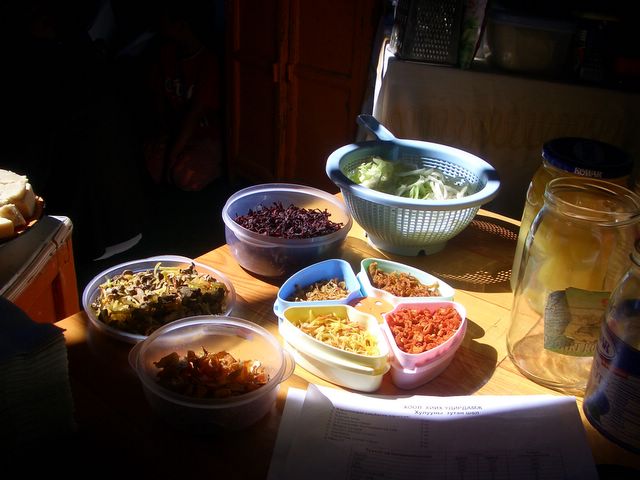
Dried and pickled goodies on display, Bayankhongor

Gazpacho in the Gobi

Sain Bainuu Viewers- Bi tantai daihiat ulzandah bayartai bain (I am pleased to meet you again, viewers).

Into every life a little hiatus must fall, and so it is with this chronicle of Fast Times at Mongolia High. It's been a busy few weeks, the ramifications of which are such that future entries may be shorter and less frequent. While this will doubtless come as a relief to those of you who have moseyed over, looked at this and said "eeeh, I don't have time for this" before heading to the fridge to see if there's any pie left (I'm looking at you, Kwana), some others of you may be distressed by this change. Our recommendation is to read the blog, eat the pie, and try not to fret.

But what are these portentous events? Have all keyboards mysteriously reverted to Mongolian script? Did a passing yak trample our hard drive? Is there something besides soy in the sausages? No, viewers, it's more than these. After fifteen months of kiddie swims and toddler groups, I have finally rejoined the cabal of the Gainfully Employed. It has, luckily, been a relatively simple transition to make. After a few days on the job, I no longer had the urge to sniff my colleagues' nappies when they whimper, and they all seem to like the introduction of cookies and juice, and naptime after lunch. Natty, on the other hand, still has not given me his 2005 workplan, and his petty cash allocations are a mess.

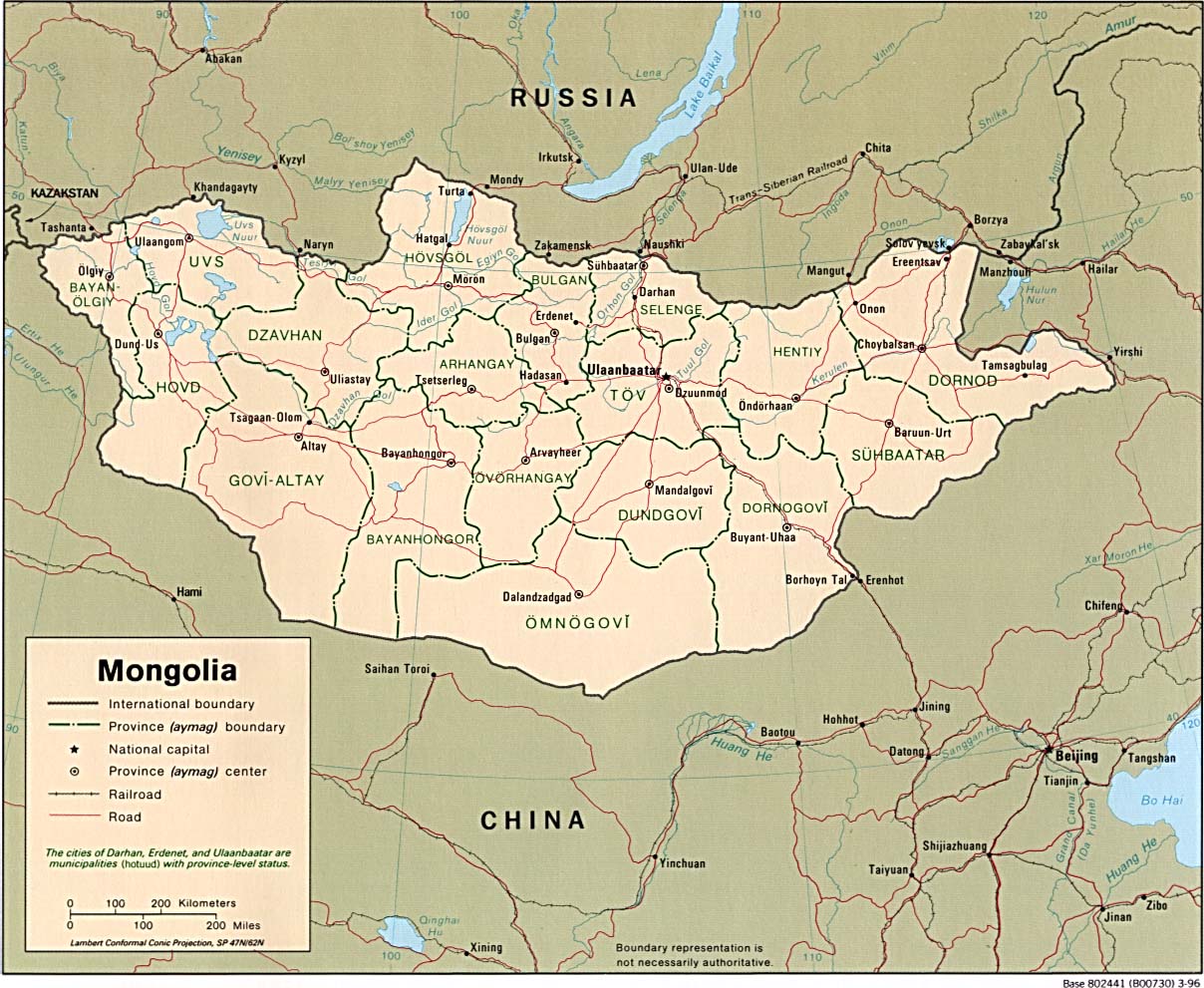
I'm working for the Adventist Development and Relief Agency (ADRA), a medium sized NGO has does work in a number of different sectors (health, education, microcredit,etc). I've been hired to oversee four different projects to do with food security, spread over Bayankhongor and Zavkhan aimags (see the map on the right if you're a keen-o.) For those of you who collect them, the title of the position is Food Security Coordinator, which gives me the right to enter the summer palace through the west gate, graze my goats on the village green in times of drought, and a stipend of 16 gallons of yoghurt per annum.

In order for what comes next to make any kind of sense at all, two paragraphs of context are going to have to be administered, so lie still and try not to cough as it slides down. It may prove useful one day, if Mongolian diets come up as a topic at a cocktail party, so hush up and pay attention.

Basically, the standard operating lifestyle in Mongolia centres around the herd of animals kept by every family. You herd it, milk it, get wool and skins from it, kill it, eat every bit of it, sell it, and that's it. In summer, rural Mongolians' diet centres on 'white food' (tsagaan holl, viewers), which is an inventive collection of dairy products consumed fresh, fermented, curdled, curded, aged, bewitched, bothered and bewildered. In winter, animals are slaughtered and meat is consumed- it is cold enough that meat is kept by shoving it into the rafters of the ger, where it freezes, thus you can consume an animal slowly without it going off. Easy peasy.

This is a fine system when it works, which is some of the time. If, however, the winter is extremely hard (-63 celsius, let's say), and the animals start to die, then very rapidly, the folks who depend on those animals begin to feel pretty peaky pretty quickly. In 1999-2001, there were an especially hard series of winters (called dzud, viewers) which killed off whole herds, in some cases, and forced rural families to the aimag centres to find quoi manger. Essentially, there's no plan b. So what this program attempts to do is encourage people to plant, harvest, cook and store agricultural produce as well as meat and dairy, so that they have at least a couple of options when the cold hits, and can make a bit of cash by selling off whatever veg they don't need, have more micronutrients and minerals in their diet.

See? That wasn't so bad, was it? It's fun learning stuff.

So second day on the job, and it's off to Bayankhongor, 600 kms ot the southwest, of which the last 200 are dirt tracks over the steppe- this takes about 12 hours, if you don't stop for anything more substantial than a Mars bar, more if you do.

About 120 kms outside the capital, along a section which is terraced (in that it has tarmac bits on it), we were marooned behind a truck with trailer barreling along at speeds fast enough to be unsafe but slow enough to be frustrating to be behind.

Having sounded the horn in the accustomed fashion, we moved to over take on left, half on the road and half on the shoulder, gathering speed to pass the extra long vehicle. Given the age of the truck and the probable level of noise in the cabin, the charitable explanation is that the driver did not hear our horn. Either way, as we passed the trailer, the truck rumbled fast over to the left, with the body of the trailer looking fling us into the hereafter. The driver extraordinaire (and my boss) stomped on brakes, and steered us off the shoulder and onto the plains, while the truck boomed on carefree.

Now some of you may have noticed that my employer has the word Adventist in a position of some prominence in their name, which may give some hint as to their general outlook on matters spirit and flesh. As the truck was hoving to, and it was clear we were about to be smashed to pieces, I blurted "Jesus Christ!!!". Luckily, I did not, in my panic, choose to adorn it with some of the profanity which is often inserted between the first and second names. Loud public swears may not be the best way to impress the new boss of a Christian organization, viewers. Try to refrain in future.

Once we were done with the swearing, the next day it was more driving to the edge of the Gobi desert, where the tiny community of Jinnst lies. The Gobi proper lies some distance farther south, but the Jinnst salient gives one a pretty good idea of what's out there. With sand and gravel fields all around, there is a valley of slight width which has a narrow river flowing through it. The river allows for human habitation, and along its banks is a community of not more than 30 gers, spread up and down the river. Behind the gers a huge sand dune rises, reminding you that the green beneath your feet is a shallow mirage.

Upstream from the settlement, mining has begun, and the folk of Jinnst have begun to complain that the water tastes different than before. Depending on what is found in the deposits upstream, the real possibility of mercury poisoning exists. We took water samples from the river which are now being analyzed at the lab. A bad business it will be if the water is tainted- watch this space.

Nothing grows higher than a shrub anywhere in the vast nothing, with the bewildering exception of one great big tree. It stands all by itself, quite some distance from Jinnst and the river. It is too big to get one's arms around, and is in mysteriously robust health, all green leaves in the dry breeze. We mused silently on how this tree came to be in the desert, and how it had escaped being chopped down for all these years. We speculated that it must have some mystical significance to have lasted this long. Each lost in his own thoughts, we drew these quiet meditations to a close, got the chainsaw from the boot and took the big ugly brute down. It was spoiling the view.

No, no we didn't. Did we?

Driving on, we arrived finally at Jinnst, where the river's edge veggie growers awaited. As Mongolians don't have a long history of growing stuff in the ground, part of this whole process involves a step by step training process, from planting through harvesting, to make sure everyone knows which end is up on a carrot. Today's lesson involved that cunningest of subjects, the How to Cook. This way you don't have people standing around with their crops rotting in the ground, claiming not to know what to do with rutabaga, snozzcumber, or spunkwort. Once you've successfully bagged yourself an aubergine, how do you gut, clean and roast him? How indeed.

Gathered in the welcome low light inside the ger were about forty growers, men, women and children. And up against the far wall, wearing her best whites, chef hat and crisp new apron, was a chef from the Mongolian Culinary Institute (for such a thing exists), specializing in vegetarian fare. Three tables, burners, and banks of visual aids were set up as seen on teevee cooking shows, and for the next three hours chef wowed the crowd with such unexpected wonders as squash vichyssoise, carrot with sauerkraut, apple compote and sundry other fresh and pickled bits and pieces. It went over a storm, especially as chef thoughtfully prepared enough in advance for everyone to try everything, plus everyone got a pamphlet of recipies for everything they tasted that day. Masterchef in the Ger, and so far so good in this gig.

We continued in this vein the following day, north of Gallut, a town about which our Lonely Planet states "if for some bizarre reason you find yourself in Gallut.." Well tell you what, LP, we go to Gallut to poke about in cabbage patches, that's what we do. Gallut was slightly harder to reach than usual because the wooden bridge over the river was destroyed a few days earlier when two mining company trucks well above the limits of what the timber could hold tried to cross it, splintering the bridge and hurling the second truck into the water. Luckily, we were told, they were able to get the truck out (so much for the bridge). Both trucks, having crossed, were now marooned on the other side, lined up like naughty schoolboys by the edge of the water, being made to look at what they'd done. Neither truck appeared in the least bit remorseful. Short of anything else to do, and with the bridge unlikely to get repaired anytime soon, the two truck drivers ambled on over and took in a lesson or two in how to make potato salad. Otherwise, it was more of the same, with the inclusion of the a huge frisbee match at the end of the afternoon, involving a cliff, a water hazard, two guys on horseback, a few dogs, all the men and boys over the age of seven in the village, and about half the women. Mongolians are able to throw a Frisbee pretty much instinctively, and a huge scrum of fun was had.

Thereafter, it was a short twelve hour dive back to the capital, in time to have a day off and head back to the office. Still, not bad for a first week, and certainly more frisbee and fricassee than expected.

And with the acrid fumes of pickling vinegar fumigating our nostrils, and our mining company stock dividends burning a hole in our pocket, we will draw this installment to a close. We hope you'll remember to do the required reading, mind your tongue and not overburden your herds.

Bi tantai tanilsandaa bayartai bain (nice to have seen you, viewers),

Jannie

Wednesday, August 10, 2005


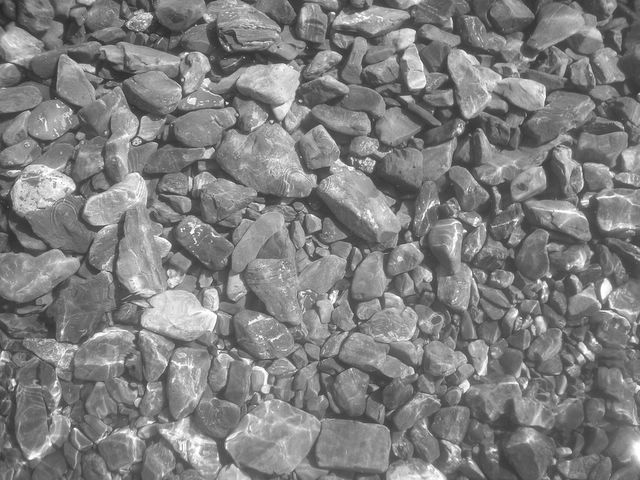
Lake floor, Ureg Nuur, western Mongolia

Uvs, Ulaangom and Ureg Nuur: An Epic Dispatch in Three Manly Sports and Four Occurences by the Lakeside

Greetings Viewers, Orood Ireree (you’re welcome, viewers)-

Apologies for the delay in service, but we have found it easier to remove the speck from the eye of the camel through the eye of a needle than it is to find the last straw that broke that same camel’s back in a haystack. You know how it is.

Our story today takes us to Uvs aimag (aimags being the largest administrative division in Mongolia, equivalent to states or provinces), all the way west and up a bit. It is 1300 kms away, takes two and a half hours to fly there, and is one hour behind Ulaanbaatar. Most of the time, this time difference is the most exciting thing about Ulaangom, the aimag capital.

In order to stay current at the regional level and to avoid confusion at the national level, people keep their timepieces on both times, such that a wall clock will show Ulaanbaatar time, a watch Ulaangom time, and car clock Ulaanbaatar time, a mobile Ulaaangom time, and people talk about this all the time. If you schedule a phone call with the capital, you can expect a lot of toing and froing over what time you should expect the call, what time UB thinks it should make the call, what time you should be ready to receive the call in case they get it wrong, but above all be on standby at least an hour each way just in case.

All of which frenzy results in such a high level of excitement that when one actually really needs to know the time of something, like what time the plane takes off, no one is quite sure- not even the pilot. Consequently, you either find yourself with hours to spare, or getting to the airport after the gate has closed. Apparently, when Daylight Savings time springs forward or falls back, half the town goes into immediate hibernation, and the other half’s brains go into immediate meltdown, while figures clothed as the Twelve Hours of Daylight dance in the streets to the music of Morris Day and the Time.

Most of the time, that is. But not the weekend we were there, when things were considerably more thrilling, as it was the 80th anniversary of the aimag’s existence. Due to redistricting, fighting, administrative restructuring, conquest, and Soviet ideas about efficiency, some aimags are more aimag than others. Uvs (pronounced uvs, viewers) is an oldie, and consequently all the aimag governors from the other 18 all showed up to hail this achievement, as did the Speaker of Parliament and a host of other bigwigs. In honour of this occasion and in deference to the needs of said biggywigs, the Uvs’ hosts hospitably laid on electricity and water for the whole holiday period. This is quite a feat, as Uvs hypothetically gets all of its power from Russia. However, being an older aimag, its memory isn’t what it used to be, and it has completely misplaced its change purse and it now owes Russia half a million American dollars for electricity. In order to jog Uvs’ memory, Russia has turned off all supplies of juice until it remembers where it hid its last pension check. Uvs is still scratching its head. In fairness, Uvs is not the only western aimag in this predicament. Either way, the dazzling glare of two phase electric current and 4WD horseless carriages in the high street all contributed to a splendid festive atmosphere.

The celebrations centred, as they always do, on the three manly sports- wrestling, archery and horse racing. In fact, Mongolians are so keen on naadam celebrations that the government is trying to limit celebrations to one per aimag per year. Otherwise, it seems, every time someone passes an exam or spots a new moon, whole provinces bunk off minding the sheep and starts wrestling in the dust and shooting arrows about the place. Either way, manly as these sports may be, spectator friendly they are not.

Wrestling. Men in tight blues, red chestless singlets (to show they are not women) and pointy hats grabbing hold of each other’s shoulders, throwing 90 degree shapes, and walking slowly in a circle. This is not to say any one of them could not thump you in both UB time and Ulaangom time and once more for Greenwich Mean Time, it’s just that they don’t get any cool moves. The coolest thing about the wrestlers is the rankings, which include State Titans, Lions, Garudas (?), Elephants, Hawks and Falcons. We saw a State Elephant while we were in Ulaangom. Besides his mountainous size, we could tell he was an elephant because he had nine blind men poking at him and saying things like “but no, it’s a wastepaper basket!” and suchlike.

Archery. Men with steely gazes fix on a point in the middle distance, pull on string, arrow makes a zoomy noise and is gone. Admittedly this looks cool, but it’s impossible to tell who’s winning, how scoring works, or even what they are aiming at. It’s like tennis with only serves. Actually, no, tennis is still more boring.

Horse racing. While everyone agrees the other manly sports are okay, the whole country of Mongolia is stone crazy about horse racing. Every Naadam, racing venues are set up 35 kms from town centres, and then the whole town decamps to said venue to watch the horses as they come in, often fording rivers and scaling sheer cliffs to get there. We went along with everybody else to watch these races, and found ourselves in a ger city of thousands of people who’d come to watch these races. The starting point was a good distance off, and the horses come in in a dusty hurricane across the steppe, looking for all the world like those hordes one‘s heard about. Thing is, there are thousands of people, dozens of horses, a vast great steppe, and everything happens in lightning speed. As the horses come in with their kid jockeys aloft, everyone bolts down to the finish line to try to touch the sweat of the winning horse, which gives you good luck. After this is done, everyone ambles back to the gers to eat some more meat and talk about horses. This is repeated for six races or two days, whichever comes first. Again, not without its charm, but not exactly a thrill a minute.

Exhausted by all these sporting thrills, it was time to leave the hustle and bustle of the big city and head out to the solitude and beauty of Ureg Nuur (which seems to mean Responsibility Lake, viewers- I’m baffled), three hours west of Ulaangom. We had planned to camp by the lake, and had made arrangements with our travel agent pals to be met by a driver equipped with tents, sleeping bags, cooking equipment, and all necessary whatnot. The driver Ulaanbayar showed up, but showed a distinct lack in the tackle department. A quick liaise with our pals in the capital later, it transpired that the gear we were to have used was irrevocably lost/damaged/broken/eaten/something/anyway there isn’t any, and instead what would happen was that new gear would be loaded on the plane that morning in Ulaanbaatar, and transported up to us at the lakeside by a second car which would meet us there three hours later. It helps to have in idea of just how remote these places as you consider the viability of this plan, not to mention the possible hiccups that uptight people might spot a mile off. Not us though. Oh no.

Undeterred, we departed, and arrived at the banks of the lake more or less on schedule, with no tent to sit in, or kettle to put on to boil. So we did as is done in these parts. You stride over to the closest ger, remember your etiquette (don’t step on the threshold, don’t lean on the supports, don’t move any hats, don’t point your feet at the shrine, move clockwise, etc), take a seat and wait for the hospitality to flow. In the first instance, this included milky tea with salt which is pretty much standard, and an assortment of hard cheese and pastry items of varying palatabilty. All this was fine for the grownups, but what of little ones? What could they have? What indeed. As it happened the particular ger we stopped at had two little girls of about four and two living there, at least one of which was still breast feeding, as is Natty. And so our hostess duly obliged the visiting lad by proffering him a hit of the homegrown good stuff. Young Armstrong took a long hard look at things as they stood, had a think about it, but decided to stick with his own stash. There was, it must be said a quiet sigh of relief heard from certain quarters.

By and by, the sound of a motor was heard, and our chase car appeared. The plan had worked. Not only had the plan worked, but the runner with the camping gear was so thrilled with her errand that she brought her whole family along to share the excitement. In addition to the tents and sleeping bags, she had brought along her mother and father, her sister and her boyfriend, their younger brother and herself. They spilled out of the Russian jeep as we stood slack jawed and wondered if they were staying for the weekend, while mentally counting the teabags. But no, they were just along for the drive. Once satisfied that the tension in the guylines was acceptable, they piled back in the car and drove the three hours back, without so much as a refreshing beverage.

And then there were three and a little boy. Ulaanbayar called me over and said he wanted to show me something. He opened his mouth wide and pointed to a molar on his right side. Looking at it, it was split laterally into two pieces, from front to back. Using a combination of Mongolian, Russian and gesture, he made it clear that he needed that tooth out now. His plan was to break open a disposable razor, use the blade to cut open his gum, and then use the pliers on my Swiss Army knife to yank out the painful half of tooth. I told him that there was no way I was going to cut him with the razor, so he suggested that he make the cut but that I would have to pull the tooth out, because he wouldn’t be able to do it himself. So that is what we agreed, and that is what we did.

As night fell, and the codeine kicked in, I found a purple hat with an orange band on the beach, in perfectly serviceable condition, and the following exchange occurred in Mongolian: (all translations probably scarily accurate)
Jannie: Look. Is Hat Is.
Ulaanbayar: Yes. Blah blah blah Matches blah blah blah.
Jannie (thrilled he’s heard a word he understands.): Yes Oh Yes. Matches, yes. Matches good.
Ulaanbayar: Yes. Matches. Give me, I need.
Jannie: Yes yes yes here. (gives matches).
Ulaanbayar: Ah, thank you.

And with that, Ulaanbayar took the hat off a respectable distance, piled some grass up in it, and set it on fire. After a quiet moment and a resolution to give him any other bits of clothing just yet, we filed that one away to find out about later. It transpires that Mongolians don’t take kindly to others messing with their hats, as this is a particularly personal bit of property. This explains why along the roadside one can often see a wide variety of quite serviceable headgear, lying around unclaimed. A hat only ever has one owner, it appears. Finding a hat without one, the humane thing to do is dispose of it. Law of the steppe.

And so with the lessons of these four parables still clear in our ears and fresh on our heads, let us bring this dispatch to a close. We hope you’ll remember to keep one clock on Ulaanbaatar time at all times, keep your hat pulled firmly down around your ears, and get those teeth checked before you need my services.

Bi tantai tanilsandaa bayartah bain (nice to have met you, viewers),

Jannie

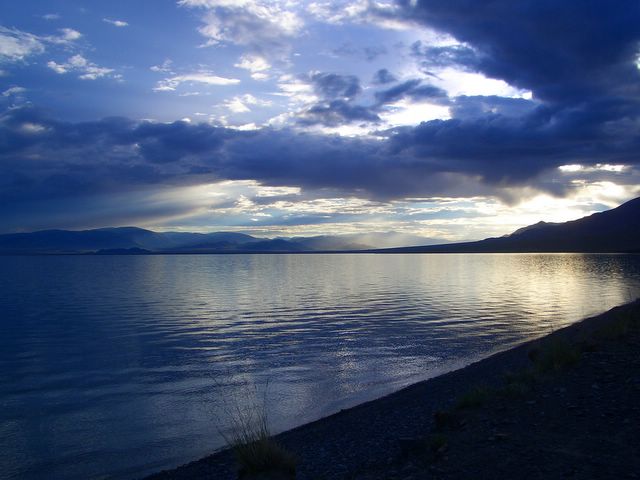
Sunset over Ureg Nuur, western Mongolia